
Loneliness is not always easy to explain. If you ask a person who feels lonely, whether they know the reason behind their loneliness, many of them may not have a clear answer.
Why?
Because it is not always something that can be explained easily. It is more like a feeling that exists without a clear beginning or explanation. What is even more complex is that loneliness can feel extremely heavy, and yet it is something that is not always seen or understood by others. Like a weight that exists silently present- but unnoticed.
According to surveys loneliness affects a large number of people but for the person going through it, it can often feel like they are the only one who feels this way. This creates a deeper sense of isolation as if no one else could possibly understand what it feels like to be in this situation. And yet the world around us seems to be noisy, joyful and connected. People are laughing, talking, and enjoying their shared moments However, someone experiencing loneliness may feel as though they are watching all of this from another dimension, present yet not part of it. This is where loneliness becomes difficult to explain. Because it is not always about being alone, sometimes it is about being surrounded by people but still feeling emotionally distant. It is about having the need to connect, but not being able to feel it in return.
In order to have an in-depth understanding of loneliness, we have to see how it is experienced everyday.
Recognizing the quiet signs
Loneliness can often show itself in day- to-day life and thought patterns. A lot of people may not even realize it at the beginning because it develops slowly.
- Feeling like you are alone, even when surrounded by people.
- Conversations with others feel surface and forced.
- You have stopped being the first one to call someone.
- You feel drained from being around others.
- You feel like an outsider, even when you are in a group.
- Overthinking small social interactions or perceived rejection.
- You are trying to stay busy all the time to avoid being in silence.
- Feeling Emotional or physical fatigue after a small social interaction.
- Struggling with staying focused or feeling scattered in your mind.
- Longing for connection.
The Hidden Impact
Loneliness does not just affect how you feel, it also affects how you behave and function on a daily basis. Sometimes it can lead you to distance yourself from relationships, overly depend on distractions or struggle to form meaningful connections with others.
Many people cope with loneliness by staying extremely busy, watching digital/media content or having shallow conversations with others, while these things might make them feel a little better for a while, they can’t replace the real emotional connection that we all need. And once you identify such patterns within yourself you begin to escape the cycle of loneliness. You could try reaching out to your friends or family, expressing your feelings or taking time to connect with other people can help you feel more connected and less lonely.
Effects of loneliness
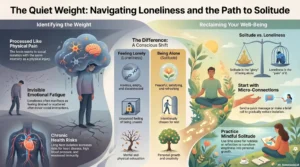
Loneliness is not only an emotional process but it influences our well-being too.When we feel lonely it can have long-term effects on our mind, body and how we behave every day. Some of the primary outcomes of loneliness include emotional and mental health.
The brain processes social isolation the same way that it processes physical pain; therefore, when someone feels lonely it can be as intense and overwhelming as a physical injury. If someone feels lonely for an extended amount of time, they may also develop feelings of depression, social anxiety or low self-worth. Loneliness can also change the way in which a person perceives themselves and their surroundings. For example, a lonely individual may be excessively sensitive in social situations, and may constantly perceive their social interactions in a negative or unsafe manner.
Physical health can also be affected by loneliness particularly because chronic loneliness leads to higher levels of stress and are at increased risk of long-term health issues, like high blood pressure (hypertension), heart disease (cardiovascular disease), and stroke. Chronic loneliness can also negatively impact an individual’s immune system as they may constantly be experiencing high levels of stress. Additionally, many individuals can experience changes to their sleep patterns like difficulty in falling asleep, waking up frequently during the night or waking up feeling fatigued, and drained from a lack of quality sleep. As time passes loneliness starts to influence a person’s daily behavior and habits which can lead to withdrawing from social situations to avoid feeling rejected or uncomfortable, and this can make the isolation feel even stronger. Things that once felt enjoyable may no longer feel meaningful especially when there is no one to share them with. Ultimately, consequences of loneliness go beyond our emotional wellbeing influencing our thoughts, actions, and overall experience of life, linking your physical and emotional being together as one.
Alone vs lonely: what is the difference?
Being alone and feeling lonely are two different experiences, being alone is a physical state of being by yourself. It can be peaceful, comfortable and even necessary at times to recharge, reflect and reconnect with yourself. Many people choose to be alone, so that they can relax, meditate or have time with themselves.On the other hand, feeling lonely is different. It is an emotional experience. It is not just about being alone but rather feeling disconnected or lacking any significant connection with anyone. What looks like solitude from the outside may feel like isolation on the inside. A person can be surrounded by others and still feel lonely if they do not feel understood, seen, or emotionally connected.
There is a huge difference between being lonely and being alone.
To have a better idea, consider an individual sitting in a cafe reading a book and listening to music, sipping coffee. They are completely involved with their own company and enjoying the moment. This is being alone – peaceful, satisfying, and refreshing. They are happy with themselves. And now, just imagine another person sitting in the cafeteria alone but constantly checking their phone, feeling anxious, and noticing the chatter around them with a sense of emptiness. They are unable to enjoy their coffee, the music, or the ambience, and find themselves wishing to be with someone. This reflects loneliness, even in a busy or pleasant environment, the individual feels disconnected and emotionally unfulfilled.
The key difference lies in the choice and experience. Being alone is choosing solitude and enjoying it whereas being lonely is the feeling of being by yourself but wishing for connection and feeling empty inside.
As the philosopher Paul Tillich said, language has created the word loneliness to express the pain of being alone, and the word solitude to express the glory of being alone.
Being alone can, therefore, be a place of growth, reflection and self-connection. Loneliness on the other hand serves as a reminder that our need for meaningful connection is currently unmet.
Coping with loneliness
Acknowledge and accept your feelings, be self-aware of what you are feeling and also understand that feeling lonely is a normal part of life. So, instead of hating yourself because you feel like this, attempt to embrace it and avoid rejecting it because sometimes merely admitting the emotion can make it a lot less overwhelming. Acceptance does not mean you are stuck, it just means you are allowing yourself to understand what is going on within you.
Journaling, when thoughts and emotions remain in our mind it can lead to feelings of overwhelmness, writing down your feelings, experiences and worries can help you clear your mind and bring a sense of calmness. Ask yourself what you might be missing or what you need from your relationships, make some time to write down your thoughts to help you identify what may be contributing to the feeling of loneliness.
Reconnect with yourself, before you seek connection outside. It is important to rebuild your connection within yourself so spend some time doing activities that bring you a sense of comfort or meaning, whether it is reading, listening to music, or engaging in a hobby. Practice self-compassion, be kind to yourself and stop criticizing yourself, and remind yourself feeling lonely does not mean something is wrong with you.
Reach out; even in tiny ways, A relationship is not always required to be deep or intense and therefore, make contact, even in small measures. . Some brief chat, a quick message or a quick call can save the day. Reaching out at first can feel difficult but small steps can gradually reduce the sense of isolation and remind you that connection is still possible. And also try to deepen the relationships you already have, as well as seek new connections and step out of your comfort zone.
Communicate more effectively, to deepen relationships, it is important to have meaningful communication. Good communication is, however, not merely talking, but also listening attentively and being present. Make an effort to start conversations even though initially it may be uncomfortable. Doing so will develop stronger and more authentic connections. Over time, this can help build stronger and more genuine connections. Sometimes, just telling a person you trust about how lonely you are can ease your feelings of isolation and make you feel heard.
Balance Solitude and Connection, spending time alone can be healing when it is done intentionally. Allow yourself room to rest and reflect but also be aware that excessive isolation will build up and cause excessive sense of loneliness. So try to create a balance that helps you to get both your need for quietiness and your need for connection. Some thrive with small intimate connections while others need broader social contact.
Making the most of your time alone, when you decide to spend time alone with purpose, you reclaim your power. Rather than perceiving it as emptiness, consider it as the chance to create, explore and develop.Use your alone time to visit a museum, try a new recipe, or work on developing a new skill- basically do things that bring you happiness. By considering your own company as valuable and sufficient, you transform solitude into a space for creativity, self-discovery, and personal growth.
Breathing exercises and mindfulness, practicing breathing exercises and mindfulness can help you to relax and become less stressed.. Box breathing or deep breathing are some of the techniques that can be used. Simple meditation and slow deep breathing techniques will enable you to be more present and will make you less stressed or overwhelmed with feelings. The practices will assist you in relaxing your nervous system by developing a feeling of balance even in the times of loneliness.
Seek help when needed, it is not a problem to ask for help when you need somebody to help you through it. Discussing your issues with a therapist or a counselor may be a safe environment to go through your feelings in a more profound way and it is important to consider seeking the best psychological counseling available to you. Support groups or shared spaces can also remind you that you are not alone in what you are experiencing.
Conclusion
Loneliness is not something that can be fixed instantly, and it is not something that always needs to be solved right away. The initial move, at times, may be as simple as accepting it and acknowledging that the feeling exists instead of ignoring it. Perhaps the most difficult thing is not the loneliness but the fatigue of faking the absence of it. It is not that we do not wish to say I am here and I feel unseen but admitting it can feel difficult sometimes even heavier than the feeling itself.
Loneliness is also a part of being human. It shows how much we rely on making connections; so just because you experience loneliness, does not mean that there is anything wrong with you. It simply means something in us is seeking closeness and meaning.